
The number of professions that allow one to fully exercise one’s humanity are few and, as the saying goes, far between. Social work is one of them, and the demand for trained professionals in this area is growing—the U.S. Bureau of Labor Statistics projects the overall employment of social workers to grow faster than the average for all occupations until at least 2034.
UHD is responding to that on a regional level, as the university will launch a new Master of Social Work (MSW) program, an initiative that addresses a workforce need while also opening the door for Gators to move beyond entry-level roles and into licensed clinical practice or leadership positions across nonprofits and government agencies.
Dana Smith, Ph.D., Associate Professor of Social Work and Program Director for the
Master of Social Work degree, said the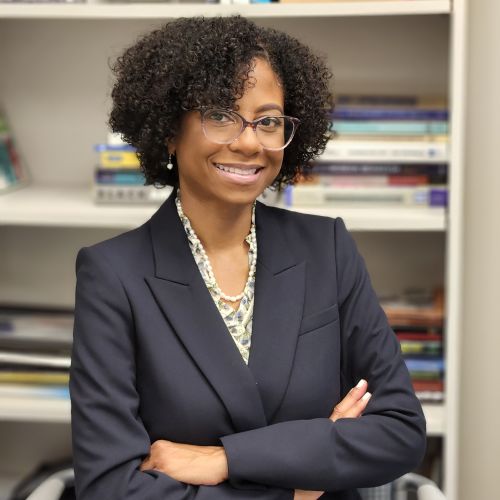 new graduate program will allow social workers to fully practice in the field. “You
can’t become a licensed clinician without an MSW, and at the master’s level, you’re
able to work independently, open a practice, or take on roles that just aren’t possible
before that.”
new graduate program will allow social workers to fully practice in the field. “You
can’t become a licensed clinician without an MSW, and at the master’s level, you’re
able to work independently, open a practice, or take on roles that just aren’t possible
before that.”
For UHD students—many of whom are balancing work, family, and financial constraints—the program is designed with access in mind. Flexible scheduling options will allow students to complete the degree full-time or part-time, with an accelerated pathway available to those already holding a Bachelor of Social Work.
“Our students deserve a pathway that allows them to change their lives financially and professionally without unnecessary barriers,” said Smith.
The curriculum reflects how the field of social work itself is evolving. Rather than separating students into clinical or policy tracks, as is common in many MSW programs, UHD’s MSW is designed to train students across both—preparing them to provide direct individual service while working toward systems-level change.
“Social work is about understanding the person in the context of their environment,”
said Liza Barros-Lane, Ph.D.,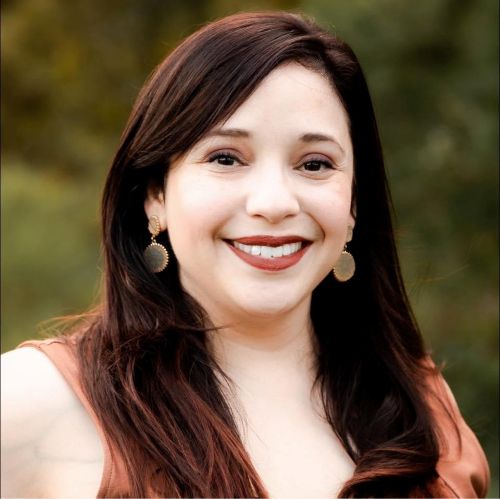 Associate Professor of Social Work and Director of Field Education. “What happens
in someone’s life is shaped by the systems around them, so our students need to be
ready to work at all levels.” The curriculum emphasizes trauma-informed practice as
well.
Associate Professor of Social Work and Director of Field Education. “What happens
in someone’s life is shaped by the systems around them, so our students need to be
ready to work at all levels.” The curriculum emphasizes trauma-informed practice as
well.
Students in the program will complete field placements across a wide range of organizations, including schools, hospitals, nonprofits, government agencies, and legal settings—reflecting both the versatility of the degree and the increasing demand.
“There’s a real shortage of social workers,” Smith said. “And the skills they develop can be used in so many different spaces ... from working with families in crisis to supporting victims of violence, students will graduate prepared to step directly into high-need, high-impact roles.”
Aside from immediate job placements, Smith and Barros-Lane are focused on the program’s long-term outcomes.
“We’re training future practitioners, yes, but also future leaders,” Lane said. “People who will go on to lead organizations, shape policy, and even come back to teach the next generation.”